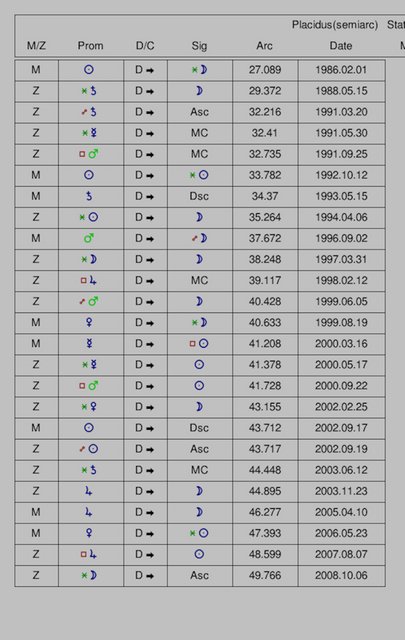
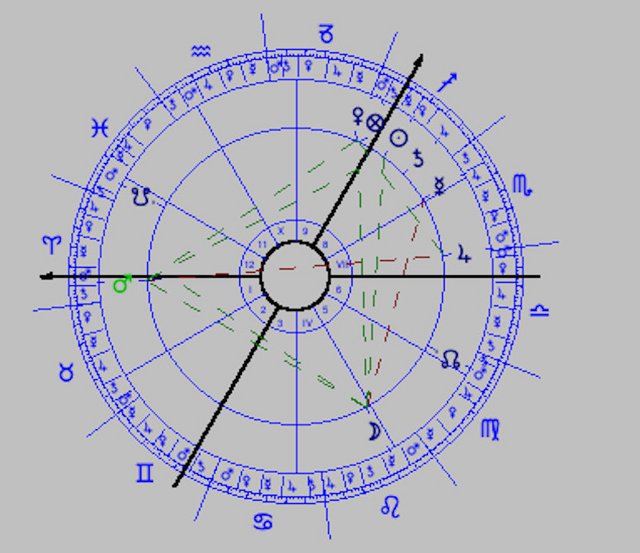
Let me see if I can answer all of that.

Yes, correcting the moon's position for parallax is the same as plotting it from the actual place of observation, which is what topocentric position means.
Origins of the terms: Ptolemy mentions three systems, but there were several others floating around the ancient world, including India (where they were called triṃś??ṃśa). The Egyptian terms seem to be the one closest to the fragmentary Babylonian evidence for the terms. John Steele's 2015 article 'A Late Babylonian Compendium of Calendrical and Stellar Astrology' (
Journal of Cuneiform Studies 67, pp. 187-215) is the most recent source I know of for the latter. I don't think anyone has been able to demonstrate a clear rationale for the lengths and rulerships of the terms (which is probably the reason several authors, including Ptolemy, came up with their own variants), although you can see some general tendencies. Steele suggests they were used as divisions both of the zodiac and of the calendar, but that doesn't help in explaining their order or extensions.
Your metaphor of putting everything in a blender is sadly accurate for a lot of modern astrology.

I have tried to avoid that by using a hierarchical approach, following ancient and medieval authors. Subjectivity can never be completely eliminated, but one can strive for some order! I know you are a musician, so think of reading a chart as playing a piece of music: every performer will give his or her unique interpretation, but playing the notes in their proper order is preferable.
Yes, directions come first and activate both the ruler of the terms (the divisor) and any planet/aspect encountered (promissors). Planets present in or aspecting the terms in the revolution are important too. Annual profections, which determine the ruler of the year, come next. And yes, the one significator I always look at is the ascendant. Depending on what I am looking for, the luminaries and midheaven may be equally important, especially if one of the luminaries is clearly the hyleg (this can be a murky area). Very occasionally I will use a non-luminary planet as a significator (usually in the context of longevity).
Divisors, promissors and the ruler of the year are all chronocrators or 'time lords', and the nub of prediction is understanding how they express themselves in the natal chart as well as the revolution. The houses they occupy are part of that.
Yes, armillaries necessarily show tropical divisions, or you would need a separate sliding measure to show the first point of Aries moving relative to the equinox point. I suppose it could be done, but you don't really need a three-dimensional tool for a simple subtraction.