The Lost Zodiac
Posted: Thu Jan 30, 2014 8:31 am
Brief Introduction
I am dissatisfied with many modern astrologers to the point where I hardly trust any of them, especially modern western ones. As a result I wanted to do my own research to draw my own conclusions. Because I distrust a lot of modern astrology a lot of my ideas will be based off of the writings of ancient astrologers, the websites of the late Alex-Blaire and Jim Eshelman, the doctrines of Vedic astrology, the statistics of Gauquelin, and esoteric knowledge and principles.
I will also use some of my personal experiences as well, but not too much. This is astrology the way I understand it. I came up with a comprehensive system to quite my mind. It is nowhere near complete and is open to opinion and discussion. You are freely entitled to agree or disagree with my content. Ultimately I am writing this post so I can both create an easy introduction to sidereal astrology for newcomers and to start a fresh beginning to open dialogue with people more experienced with astrology. This post is not an end but a beginning.
Many people who read this text are probably familiar with the basic premises of sidereal astrology. Nevertheless, I?ll do a quick rundown for those who are new to the discipline. Astrology, the study of the stars, is a discipline that looks up to the positions of the ?planets? and ?signs? they are in. The ?planets? traditionally are the seven classical celestial bodies though over time more have been added with the discovery of new planets and dwarf planets. The ?signs? are twelve equally divided regions of the area of the night sky the ?planets? travel through.
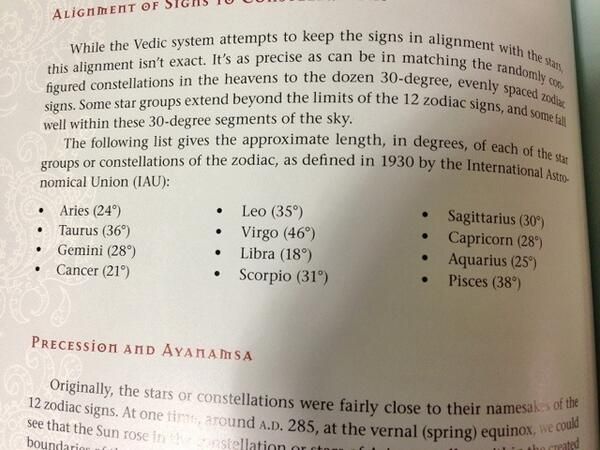
Where the ayanamsa, the starting point of the ?signs? is, is the difference between tropical astrology (the system most people in the West know) and sidereal astrology. Tropical astrology holds the ayanamsa is on the spring equinox while most sidereal astrologers posit the ayanamsa is on the first major star of the constellation Aries. Due to the precession of the equinoxes, the wobble of Earth?s tilt over millennia, the constellations are no longer where the tropical signs are. Sidereal astrologers contend that their signs, congruent with the actual observable night sky, more accurately represent the arrangements of the heavens.
A Contention
During this entire post I will entirely neglect the tropical zodiac. The tropical zodiac is the current system people tend to be most familiar with. When people tell what their ?starsign? is they are referring to where the sun was when they were born in the tropical zodiac. The tropical zodiac is ultimately the end result of a long line of history, and arguably has many unsound premises that have only become more problematic throughout the centuries. In order to rediscover the ?lost zodiac? it is necessary to go back to the ancient sources and to remove ourselves from what we are used to and what we think we know to be true. I have no intention of keeping people in their comfort zone.
I am imploring you, the reader, to approach this thing called astrology for the first time, to ?unlearn what you have learned?. I will do my best to do the same. However, keep in mind that I am only one human and thus my perspective is ultimately subjective and limited. My message is far from absolute truth. As I said before, this post is meant to open up more research and discussion on sidereal astrology. It is not an end but a beginning.
Celestial Bodies
From now on I refer to the ?planets? as bodies or celestial bodies to avoid confusion with the scientific classification of what a planet actually is. The Sun is a star, the Moon is a satellite, and Pluto is a dwarf planet from the Kuiper belt. In tropical astrology, the Sun is given the highest importance in understanding someone?s personality, so much so that most people only know what their ?starsign? is.
But astrology as the ancients practiced it operates differently. Firmicius when describing the signs does so by describing the rising sign and not the sun sign. Traditionally Vedic astrology privileges the Moon and not the sun as the primary factor in a person?s natal chart. The skyscript.uk user Papretis conducted zir?s own research and as I write this post currently leans towards the idea that the ascendant and not the Sun sign is the strongest factor in determining a person?s character. Gauquelin when conducting his research concluded that the angularity (the positions of the planets relative to one another) played a much greater role in determining a person?s character than the Sun.
Furthermore, Papretis concluded that having planets in a sign did not make one more like that sign. Instead, it made the sign more like the planets that occupied it. For example, having the Moon, Sun, and Mercury in Sagittarius does not make me more Sagittarius-like. Instead it makes Sagittarius more Sun-like and Moon-like. Of course the research is only beginning and there is so much more to learn.
Ascendant
The ascendant or rising sign is the sign that appears over the east horizon when you are born. The ascendant is very important because it acts as the ?filter? through which all characterizes of one?s natal chart express themselves. The bodies that are at the ascendant are in most circles of astrology given a huge importance because they are part of the ?filter?.
Moon
The Moon traditionally rules over realms dealing with the mother, nurturing, the home, family, the mistress of the house, and legitimate partnerships. The Moon also rules material possessions such as money and other fortunes gained and lost. Also prominent areas of governance are people close to home such as the family and the town gathering, as well as meandered wanderings. The Moon generally indicates the casual parts of a personality, including personal mannerisms, pleasures, and idiosyncrasies. The Moon shows adaptability to the environment, absorbs the social atmosphere, and represents feelings. Strangely enough, research shows the Moon influences people to have aggressive ?masculine? professions such as business executives, military careers, and politicians. People under the Moon?s influence also have strong creative personalities, such as people who are writers, painters, conductors, and engineers. The Moon rules the left eye, the stomach, the breasts, and spleen. The Moon?s element is water.
In mythology, the Moon is the archetypical woman and mother, the Great Goddess from whom life was created, nurtured, and protected. Long ago in ancient history the Moon was one of the fewest deities worshipped and her waxing and waning controlled life and death on earth, and she is the patron of witches and magic. Originally, the moon, not the Sun, was used to tell time because of her 13 lunar cycles, which both represent menstruation and the phases of a woman?s life. Unusual to modern ears is how the Moon is described as active while the Sun is described as passive. The Moon controls and directs not only the Sun?s light but the very course the Sun travels, and myths such as Diana pursuing Lucifer and seducing him also show the Moon?s aggression. Regarding the aggressive occupations listed above, the Moon embodies not a delicate sweet lady but a mama bear.
Sun
The Sun rules over traditionally masculine realms, such as the intellect and mental perception, as well as offices of rulership and authority, such as the king, the judge, the master, authority over the masses, noble personages, and high priesthood. The Sun also rules dignity and formal gestures, public reputation, and honors commemorating an individual. The Sun bestows authority, power, and eminence, as well as life and vitality. The Sun influences people to take public performance occupations such as actors and pop singers, but at the same time people ruled by the Sun show occult behaviors such as tarot card readers, cult followers, and UFO sightings. The Sun rules over the right eye, the heart, spiritual faculties, and the nerves. While the Moon seems to betray an aggressive and strong character the Sun by contrast appears passive and delicate. The Sun?s element is fire.
In mythology, the Sun is the archetypical man and father. The sun is steadfast in his course, appearing day after day, year after year, providing the light, heat, and warmth necessary to sustain life. As such, the Sun also frequently symbolizes resurrection and immortality for each time he descends into darkness he rises again. The Sun represents the hero or central character who goes on his heroic quest. In Joseph Campbell?s writings, this means leaving home, symbolically dying, and resurrecting and returning. The Sun also embodied darker qualities such as the unconstrained ego, as evidenced by the wrath of Heracles and the downfall of Icarus. Representing the ego, the Sun isn?t good at relating and compromising with other people.
Mercury
Mercury rules over areas of mental faculty and education, such as learning, reasoning, and schools, and also rules over communication, embassies, marketing, accounting, management, banking, learning, reasoning, Mercury also rules over a broad range of other professions from doctors to temple builders, and modelers. Two other prominent themes is that of youth, of childhood, and games as well as deceit, gambling, and slight of hand. He dominates a chart where traveling is involved. People influenced by Mercury show a variety of different occupations. One would be a wealth of sports professions as well as outdoor occupation. Another prominent theme would be of action, movement, and communication, from real estate agents to social workers to cartoonists and journalists. Also shown are a high number of mental illnesses like manic-depressives, psychotic people, and suicidal people. Mercury rules the hands, shoulders, joints, intestines, ears, and tongue. Mercury?s element is earth.
In classical myth Mercury was the messenger of the gods who frequently traveled between Olympus and earth per his occupation. In Rome his major festival was the Mercuralia celebrated on May 15 where merchants sprinkled water from the sacred well of Porta Capena on their heads. A versatile god, Mercury invented the lyre from a tortoise shell and the Romans in Gaul claimed Mercury was responsible for inventing all the arts. Another aspect of Mercury is the doppelganger, often a shadow version of a person. As usual with Mercury, there are many different meanings and incarnations of the doppleganger. In Egypt it was the ka, a ?spirit double? who had the same memories and feelings as the original. In Norse mythology the vardoger was a ghostly double who could be seen performing a person?s actions in advance.
Venus
As a benefic body Venus bestows many blessings to those under her rule. Venus rules over cheerfulness, good companionship, generosity, and the exchange of gifts. Venus rules over the fine arts and beautiful things like sweet singing, music, painting, the mixing of colors, dyeing of clothes, ornaments, craftsmanship, and embroidery. Venus represents appreciation, pleasantness, ability to love anyone, and social interaction, gentleness, and asceticism. Venus influences people to be peaceful and cooperative. Venus influences people to be sensible and cooperative in a variety of fields from TV personalities, textbook writers, diplomats, counselors, and therapists. However, there are some anomalies such as rapists and sex offenders. Venus rules the face: the neck, lips, sense of smell, the lungs, and front of the body. Venus?s element is water.
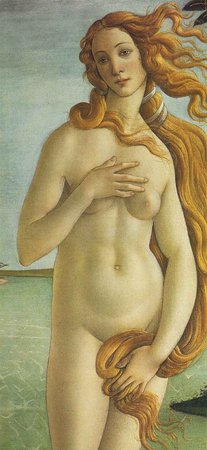
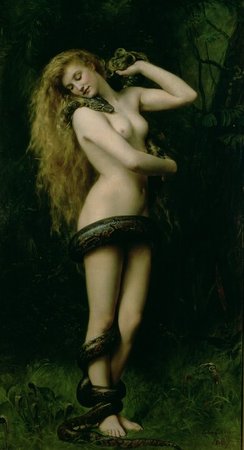
Among the gods in classical mythology Venus is famous for not originating from Zeus unlike other gods of her ?generation?. Venus simply appeared from sea froth, fully adult in form. In Babylon Venus was worshipped as Ishtar, a multifaceted goddess who represented erotica, love, and fertility, but also warfare and wisdom. One of Venus?s older names was Lucifer, for she was and still is known as the day star because of her glow. In Greek and Roman stories Venus often entangled herself in affairs with Mars, a fitting if not strange couple for two embodiments of female and male, with qualities so far apart.
Mars
A malefic body, Mars, as well as the areas of his governance, are significantly darker in tone. Mars rules over crime and violence, such as theft, murder, plundering, prostitution, deceit, insurgency, imprisonment, loss of property, torture, lawsuits, and exile. Mars rules over misfortunes regarding relationships such as rape, abortion, sadomasochism, abuse, the death of wives, and alienation from the family. But Mars does rule positive things, such as campaigns and leadership, fire, craftwork, masonry, governing, and hunting. Mars represents aggression, competitiveness, and strong energy reserves, as well as conviction to defend one?s values. People governed by Mars tend to lead conflict-ridden lives such as thieves, executed people, prisoners, murderers, and drug dealers. Also prominent are people who fight against injustice such as political activists, revolutionaries, and critics. Mars rules over the head, blood, the genitals, the body?s back and underside, and the elimination of waste. Mars?s element is fire.
Since Egypt and Babylon the ancients have watched Mars?s passage in the sky with trepidation since Mars usually warned invasion by foreigners, pestilence, or insurgency of the king?s throne. In Greek mythology, Ares was a much-despised outcast of Olympus, appearing in few myths and those in which he did appear he was treated with contempt. But in Rome, Ares became the venerable Mars, the patriarch and father of the founders of Rome, second only to Jupiter. In Babylonian myth, Nergel, the god of war, usurped the dark queen?s underworld kingdom and became the new ruler. In other versions of the story, Nergel and the dark queen rule the underworld together thereafter. Because of this tale Mars is strongly associated with death and the underworld. Astrologer Ign Ezra proposed Mars to be feminine rather than masculine. If Mars is indeed a woman, he resembles matriarch warrior goddesses such as Morrigan, Ishtar, and Kali.
Jupiter
Like Venus, Jupiter is a benefic body and as such grants abundance to those under his rulership. Jupiter rules over actions and events of gain and flourishing, such as childbearing, engendering, cementing friendships and political ties, trust, inheritance, the deposit of money and securing of bonds. Jupiter also rules religion and social order, such as offices and ranks, as well as freedom and the relief of troubles. Jupiter represents generosity, optimism, and gaining people?s endearment, as well as propriety and the striving for superiority. Jupiter influences people to otherworldliness and passivity, opposite of Mercury?s activity and communication. Such occupations include mystical experiences, being spiritual founders as well as rejecting a religion, mediums, and near death experiences. Jupiter rules the thighs and feet, the sperm, uterus and egg, and liver. Jupiter?s element is aether.
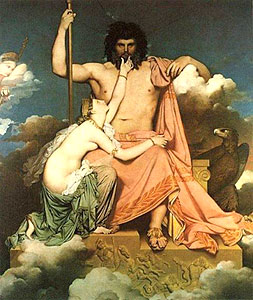
Jupiter is the highest of all gods, going by the name of Zeus in Greece and Marduk in Rome. Jupiter is creator and arbiter of laws as when Marduk spoke to Hammurabi to write down civilizations first written moral code in the center of the city. In the East and in Vedic astrology Jupiter is known alongside Saturn as a guru or teacher who impresses wisdom on his students and guides them to enlightenment. Jupiter is the highest metaphysical point. If he is not the highest of all gods he is the godhead, the divinity of creation itself, recognized as the ?one true god? by followers of monotheistic faiths.
Saturn
Like Mars, Saturn is a malefic body, and as a result also rules over misfortune and the unpleasant. Saturn rules over the obstacles in life such as unemployment, failures in business, imprisonment, unremitting lawsuits, bereavement, loss, and childlessness. Saturn also rules over things related to farms such as serfs, farmers, and profit. On the bright side Saturn rules over positions of eminence such as supervisors, the managers of property, heads of business, and being the father of others? children. Saturn is inhibiting and withdrawn, marks self-preservation, frugality, and hard work. He limits and restrains what he touches. While the Sun and Moon signify creativity and originality, their opposite, Saturn points to work that is tedious, manual labor, and ?mass mentality?. People influenced by Saturn contribute to the ?mass culture? such as being porn stars and sex symbols, scriptwriters and actors, and farmers. Also included are people of great education, philosophers, and researchers, positions that potentially lead to long and dull work. Saturn rules phlegm, the bladder, kidneys, the tendons, the skeletal system, and the lymphatic system. Saturn?s element is Air.
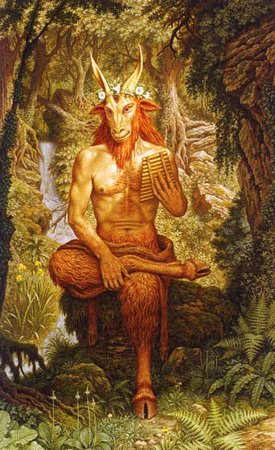
Saturn is one of the eldest of the classical gods in Greek and Roman myth. He was born from Uranus and Gaia and overthrew his father to avenge the imprisonment of his brothers and sisters. However, Saturn became a tyrant himself fearing that his children would overthrow him just as he overthrew Uranus. Saturn is infamously known for consuming his children when they were babies but he was eventually defeated by Jupiter and forced to flee. Saturn is frequently represented with a sickle and an hourglass, representing the reaping of crops but also of humans whose time has come. Saturn represents old age, the slowness of time, and our physical and mental limits. Another key archetype to Saturn is Pan, the goat, whose name means All Father. Pan encompassed the collective life force of all things, and our oneness with nature. Appropriately for Pan, in Vedic astrology Saturn is associated with licentiousness.
Uranus
Uranus is in a way rather contradictory. Whereas Saturn imposes limitations Uranus seeks to shatter them to establish individuality, originality, and freedom, especially intellectual freedom. Uranus seeks constant novelty and stimulation, and rules breakthroughs, new ideas, and jarring, outlandish actions and concepts, abrupt and sudden events. At the same time Uranus is aloof and remote. Uranus was the second primeval god of Greek myth, the first being Gaia who bore him. Uranus, the sky, is vast, boundless, and indefinable. Uranus is striving, infinitely reaching beyond.
Neptune
Neptune symbolizes the mystical, nebulous, and vague, and also what is shadowy and mysterious. Neptune pronounces people?s sensitivity in all ways, and represents dramatization and pretentiousness. Neptune also lacks physical presence and is diffusing. In mythology Neptune was the god of the seas and thus conveys a vastness similar to Uranus, and just as similarly indefinable. Since Neptune is watery, Neptune rules the emotions and the subconscious in a similar way the Moon does.
Pluto
Pluto is the exception to every rule, singled out from every norm. Strong desire to be independent and unhampered by others. Pluto is eccentric, extreme, separating, disruptive, and isolative. Pluto also represents fundamental and drastic changes, likened to a force of nature, whether happening in one?s personal life or as events in the world.
I am dissatisfied with many modern astrologers to the point where I hardly trust any of them, especially modern western ones. As a result I wanted to do my own research to draw my own conclusions. Because I distrust a lot of modern astrology a lot of my ideas will be based off of the writings of ancient astrologers, the websites of the late Alex-Blaire and Jim Eshelman, the doctrines of Vedic astrology, the statistics of Gauquelin, and esoteric knowledge and principles.
I will also use some of my personal experiences as well, but not too much. This is astrology the way I understand it. I came up with a comprehensive system to quite my mind. It is nowhere near complete and is open to opinion and discussion. You are freely entitled to agree or disagree with my content. Ultimately I am writing this post so I can both create an easy introduction to sidereal astrology for newcomers and to start a fresh beginning to open dialogue with people more experienced with astrology. This post is not an end but a beginning.
Many people who read this text are probably familiar with the basic premises of sidereal astrology. Nevertheless, I?ll do a quick rundown for those who are new to the discipline. Astrology, the study of the stars, is a discipline that looks up to the positions of the ?planets? and ?signs? they are in. The ?planets? traditionally are the seven classical celestial bodies though over time more have been added with the discovery of new planets and dwarf planets. The ?signs? are twelve equally divided regions of the area of the night sky the ?planets? travel through.
Where the ayanamsa, the starting point of the ?signs? is, is the difference between tropical astrology (the system most people in the West know) and sidereal astrology. Tropical astrology holds the ayanamsa is on the spring equinox while most sidereal astrologers posit the ayanamsa is on the first major star of the constellation Aries. Due to the precession of the equinoxes, the wobble of Earth?s tilt over millennia, the constellations are no longer where the tropical signs are. Sidereal astrologers contend that their signs, congruent with the actual observable night sky, more accurately represent the arrangements of the heavens.
A Contention
During this entire post I will entirely neglect the tropical zodiac. The tropical zodiac is the current system people tend to be most familiar with. When people tell what their ?starsign? is they are referring to where the sun was when they were born in the tropical zodiac. The tropical zodiac is ultimately the end result of a long line of history, and arguably has many unsound premises that have only become more problematic throughout the centuries. In order to rediscover the ?lost zodiac? it is necessary to go back to the ancient sources and to remove ourselves from what we are used to and what we think we know to be true. I have no intention of keeping people in their comfort zone.
I am imploring you, the reader, to approach this thing called astrology for the first time, to ?unlearn what you have learned?. I will do my best to do the same. However, keep in mind that I am only one human and thus my perspective is ultimately subjective and limited. My message is far from absolute truth. As I said before, this post is meant to open up more research and discussion on sidereal astrology. It is not an end but a beginning.
Celestial Bodies
From now on I refer to the ?planets? as bodies or celestial bodies to avoid confusion with the scientific classification of what a planet actually is. The Sun is a star, the Moon is a satellite, and Pluto is a dwarf planet from the Kuiper belt. In tropical astrology, the Sun is given the highest importance in understanding someone?s personality, so much so that most people only know what their ?starsign? is.
But astrology as the ancients practiced it operates differently. Firmicius when describing the signs does so by describing the rising sign and not the sun sign. Traditionally Vedic astrology privileges the Moon and not the sun as the primary factor in a person?s natal chart. The skyscript.uk user Papretis conducted zir?s own research and as I write this post currently leans towards the idea that the ascendant and not the Sun sign is the strongest factor in determining a person?s character. Gauquelin when conducting his research concluded that the angularity (the positions of the planets relative to one another) played a much greater role in determining a person?s character than the Sun.
Furthermore, Papretis concluded that having planets in a sign did not make one more like that sign. Instead, it made the sign more like the planets that occupied it. For example, having the Moon, Sun, and Mercury in Sagittarius does not make me more Sagittarius-like. Instead it makes Sagittarius more Sun-like and Moon-like. Of course the research is only beginning and there is so much more to learn.
Ascendant
The ascendant or rising sign is the sign that appears over the east horizon when you are born. The ascendant is very important because it acts as the ?filter? through which all characterizes of one?s natal chart express themselves. The bodies that are at the ascendant are in most circles of astrology given a huge importance because they are part of the ?filter?.
Moon
The Moon traditionally rules over realms dealing with the mother, nurturing, the home, family, the mistress of the house, and legitimate partnerships. The Moon also rules material possessions such as money and other fortunes gained and lost. Also prominent areas of governance are people close to home such as the family and the town gathering, as well as meandered wanderings. The Moon generally indicates the casual parts of a personality, including personal mannerisms, pleasures, and idiosyncrasies. The Moon shows adaptability to the environment, absorbs the social atmosphere, and represents feelings. Strangely enough, research shows the Moon influences people to have aggressive ?masculine? professions such as business executives, military careers, and politicians. People under the Moon?s influence also have strong creative personalities, such as people who are writers, painters, conductors, and engineers. The Moon rules the left eye, the stomach, the breasts, and spleen. The Moon?s element is water.
In mythology, the Moon is the archetypical woman and mother, the Great Goddess from whom life was created, nurtured, and protected. Long ago in ancient history the Moon was one of the fewest deities worshipped and her waxing and waning controlled life and death on earth, and she is the patron of witches and magic. Originally, the moon, not the Sun, was used to tell time because of her 13 lunar cycles, which both represent menstruation and the phases of a woman?s life. Unusual to modern ears is how the Moon is described as active while the Sun is described as passive. The Moon controls and directs not only the Sun?s light but the very course the Sun travels, and myths such as Diana pursuing Lucifer and seducing him also show the Moon?s aggression. Regarding the aggressive occupations listed above, the Moon embodies not a delicate sweet lady but a mama bear.
Sun
The Sun rules over traditionally masculine realms, such as the intellect and mental perception, as well as offices of rulership and authority, such as the king, the judge, the master, authority over the masses, noble personages, and high priesthood. The Sun also rules dignity and formal gestures, public reputation, and honors commemorating an individual. The Sun bestows authority, power, and eminence, as well as life and vitality. The Sun influences people to take public performance occupations such as actors and pop singers, but at the same time people ruled by the Sun show occult behaviors such as tarot card readers, cult followers, and UFO sightings. The Sun rules over the right eye, the heart, spiritual faculties, and the nerves. While the Moon seems to betray an aggressive and strong character the Sun by contrast appears passive and delicate. The Sun?s element is fire.
In mythology, the Sun is the archetypical man and father. The sun is steadfast in his course, appearing day after day, year after year, providing the light, heat, and warmth necessary to sustain life. As such, the Sun also frequently symbolizes resurrection and immortality for each time he descends into darkness he rises again. The Sun represents the hero or central character who goes on his heroic quest. In Joseph Campbell?s writings, this means leaving home, symbolically dying, and resurrecting and returning. The Sun also embodied darker qualities such as the unconstrained ego, as evidenced by the wrath of Heracles and the downfall of Icarus. Representing the ego, the Sun isn?t good at relating and compromising with other people.
Mercury
Mercury rules over areas of mental faculty and education, such as learning, reasoning, and schools, and also rules over communication, embassies, marketing, accounting, management, banking, learning, reasoning, Mercury also rules over a broad range of other professions from doctors to temple builders, and modelers. Two other prominent themes is that of youth, of childhood, and games as well as deceit, gambling, and slight of hand. He dominates a chart where traveling is involved. People influenced by Mercury show a variety of different occupations. One would be a wealth of sports professions as well as outdoor occupation. Another prominent theme would be of action, movement, and communication, from real estate agents to social workers to cartoonists and journalists. Also shown are a high number of mental illnesses like manic-depressives, psychotic people, and suicidal people. Mercury rules the hands, shoulders, joints, intestines, ears, and tongue. Mercury?s element is earth.
In classical myth Mercury was the messenger of the gods who frequently traveled between Olympus and earth per his occupation. In Rome his major festival was the Mercuralia celebrated on May 15 where merchants sprinkled water from the sacred well of Porta Capena on their heads. A versatile god, Mercury invented the lyre from a tortoise shell and the Romans in Gaul claimed Mercury was responsible for inventing all the arts. Another aspect of Mercury is the doppelganger, often a shadow version of a person. As usual with Mercury, there are many different meanings and incarnations of the doppleganger. In Egypt it was the ka, a ?spirit double? who had the same memories and feelings as the original. In Norse mythology the vardoger was a ghostly double who could be seen performing a person?s actions in advance.
Venus
As a benefic body Venus bestows many blessings to those under her rule. Venus rules over cheerfulness, good companionship, generosity, and the exchange of gifts. Venus rules over the fine arts and beautiful things like sweet singing, music, painting, the mixing of colors, dyeing of clothes, ornaments, craftsmanship, and embroidery. Venus represents appreciation, pleasantness, ability to love anyone, and social interaction, gentleness, and asceticism. Venus influences people to be peaceful and cooperative. Venus influences people to be sensible and cooperative in a variety of fields from TV personalities, textbook writers, diplomats, counselors, and therapists. However, there are some anomalies such as rapists and sex offenders. Venus rules the face: the neck, lips, sense of smell, the lungs, and front of the body. Venus?s element is water.
Among the gods in classical mythology Venus is famous for not originating from Zeus unlike other gods of her ?generation?. Venus simply appeared from sea froth, fully adult in form. In Babylon Venus was worshipped as Ishtar, a multifaceted goddess who represented erotica, love, and fertility, but also warfare and wisdom. One of Venus?s older names was Lucifer, for she was and still is known as the day star because of her glow. In Greek and Roman stories Venus often entangled herself in affairs with Mars, a fitting if not strange couple for two embodiments of female and male, with qualities so far apart.
Mars
A malefic body, Mars, as well as the areas of his governance, are significantly darker in tone. Mars rules over crime and violence, such as theft, murder, plundering, prostitution, deceit, insurgency, imprisonment, loss of property, torture, lawsuits, and exile. Mars rules over misfortunes regarding relationships such as rape, abortion, sadomasochism, abuse, the death of wives, and alienation from the family. But Mars does rule positive things, such as campaigns and leadership, fire, craftwork, masonry, governing, and hunting. Mars represents aggression, competitiveness, and strong energy reserves, as well as conviction to defend one?s values. People governed by Mars tend to lead conflict-ridden lives such as thieves, executed people, prisoners, murderers, and drug dealers. Also prominent are people who fight against injustice such as political activists, revolutionaries, and critics. Mars rules over the head, blood, the genitals, the body?s back and underside, and the elimination of waste. Mars?s element is fire.
Since Egypt and Babylon the ancients have watched Mars?s passage in the sky with trepidation since Mars usually warned invasion by foreigners, pestilence, or insurgency of the king?s throne. In Greek mythology, Ares was a much-despised outcast of Olympus, appearing in few myths and those in which he did appear he was treated with contempt. But in Rome, Ares became the venerable Mars, the patriarch and father of the founders of Rome, second only to Jupiter. In Babylonian myth, Nergel, the god of war, usurped the dark queen?s underworld kingdom and became the new ruler. In other versions of the story, Nergel and the dark queen rule the underworld together thereafter. Because of this tale Mars is strongly associated with death and the underworld. Astrologer Ign Ezra proposed Mars to be feminine rather than masculine. If Mars is indeed a woman, he resembles matriarch warrior goddesses such as Morrigan, Ishtar, and Kali.
Jupiter
Like Venus, Jupiter is a benefic body and as such grants abundance to those under his rulership. Jupiter rules over actions and events of gain and flourishing, such as childbearing, engendering, cementing friendships and political ties, trust, inheritance, the deposit of money and securing of bonds. Jupiter also rules religion and social order, such as offices and ranks, as well as freedom and the relief of troubles. Jupiter represents generosity, optimism, and gaining people?s endearment, as well as propriety and the striving for superiority. Jupiter influences people to otherworldliness and passivity, opposite of Mercury?s activity and communication. Such occupations include mystical experiences, being spiritual founders as well as rejecting a religion, mediums, and near death experiences. Jupiter rules the thighs and feet, the sperm, uterus and egg, and liver. Jupiter?s element is aether.
Jupiter is the highest of all gods, going by the name of Zeus in Greece and Marduk in Rome. Jupiter is creator and arbiter of laws as when Marduk spoke to Hammurabi to write down civilizations first written moral code in the center of the city. In the East and in Vedic astrology Jupiter is known alongside Saturn as a guru or teacher who impresses wisdom on his students and guides them to enlightenment. Jupiter is the highest metaphysical point. If he is not the highest of all gods he is the godhead, the divinity of creation itself, recognized as the ?one true god? by followers of monotheistic faiths.
Saturn
Like Mars, Saturn is a malefic body, and as a result also rules over misfortune and the unpleasant. Saturn rules over the obstacles in life such as unemployment, failures in business, imprisonment, unremitting lawsuits, bereavement, loss, and childlessness. Saturn also rules over things related to farms such as serfs, farmers, and profit. On the bright side Saturn rules over positions of eminence such as supervisors, the managers of property, heads of business, and being the father of others? children. Saturn is inhibiting and withdrawn, marks self-preservation, frugality, and hard work. He limits and restrains what he touches. While the Sun and Moon signify creativity and originality, their opposite, Saturn points to work that is tedious, manual labor, and ?mass mentality?. People influenced by Saturn contribute to the ?mass culture? such as being porn stars and sex symbols, scriptwriters and actors, and farmers. Also included are people of great education, philosophers, and researchers, positions that potentially lead to long and dull work. Saturn rules phlegm, the bladder, kidneys, the tendons, the skeletal system, and the lymphatic system. Saturn?s element is Air.
Saturn is one of the eldest of the classical gods in Greek and Roman myth. He was born from Uranus and Gaia and overthrew his father to avenge the imprisonment of his brothers and sisters. However, Saturn became a tyrant himself fearing that his children would overthrow him just as he overthrew Uranus. Saturn is infamously known for consuming his children when they were babies but he was eventually defeated by Jupiter and forced to flee. Saturn is frequently represented with a sickle and an hourglass, representing the reaping of crops but also of humans whose time has come. Saturn represents old age, the slowness of time, and our physical and mental limits. Another key archetype to Saturn is Pan, the goat, whose name means All Father. Pan encompassed the collective life force of all things, and our oneness with nature. Appropriately for Pan, in Vedic astrology Saturn is associated with licentiousness.
Uranus
Uranus is in a way rather contradictory. Whereas Saturn imposes limitations Uranus seeks to shatter them to establish individuality, originality, and freedom, especially intellectual freedom. Uranus seeks constant novelty and stimulation, and rules breakthroughs, new ideas, and jarring, outlandish actions and concepts, abrupt and sudden events. At the same time Uranus is aloof and remote. Uranus was the second primeval god of Greek myth, the first being Gaia who bore him. Uranus, the sky, is vast, boundless, and indefinable. Uranus is striving, infinitely reaching beyond.
Neptune
Neptune symbolizes the mystical, nebulous, and vague, and also what is shadowy and mysterious. Neptune pronounces people?s sensitivity in all ways, and represents dramatization and pretentiousness. Neptune also lacks physical presence and is diffusing. In mythology Neptune was the god of the seas and thus conveys a vastness similar to Uranus, and just as similarly indefinable. Since Neptune is watery, Neptune rules the emotions and the subconscious in a similar way the Moon does.
Pluto
Pluto is the exception to every rule, singled out from every norm. Strong desire to be independent and unhampered by others. Pluto is eccentric, extreme, separating, disruptive, and isolative. Pluto also represents fundamental and drastic changes, likened to a force of nature, whether happening in one?s personal life or as events in the world.

 that outdated and distorted tropical placidus system where mainstream media channels it to the masses like "entertainment" is now so "No more!" for me...

